5.20-5.26, 2009
Ganaartspace, Seoul
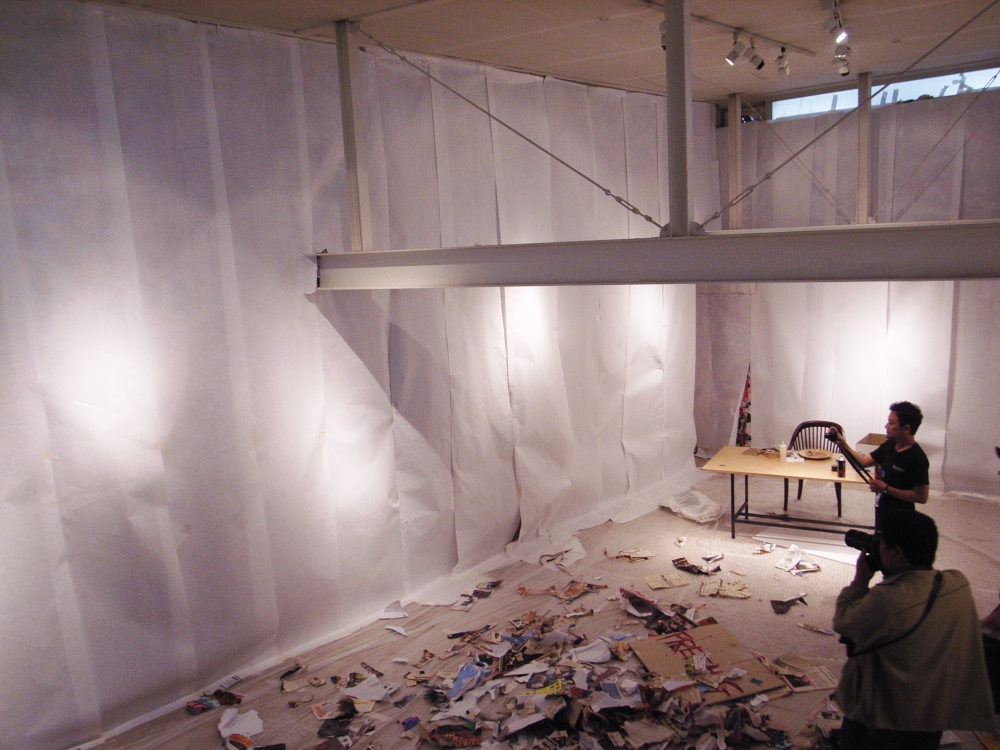
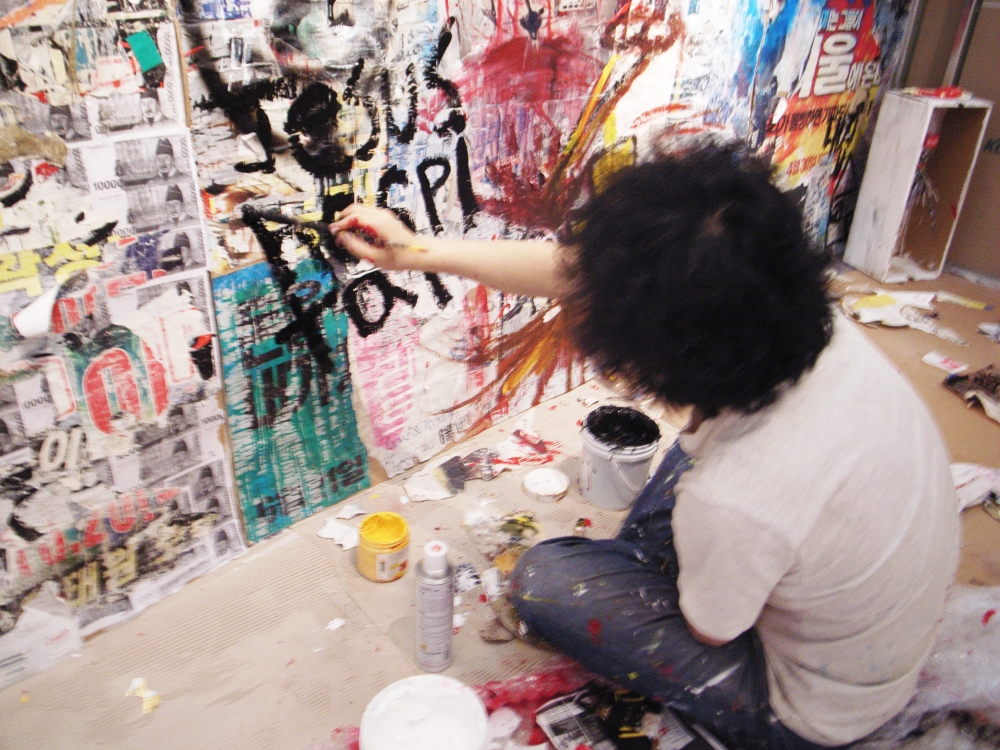
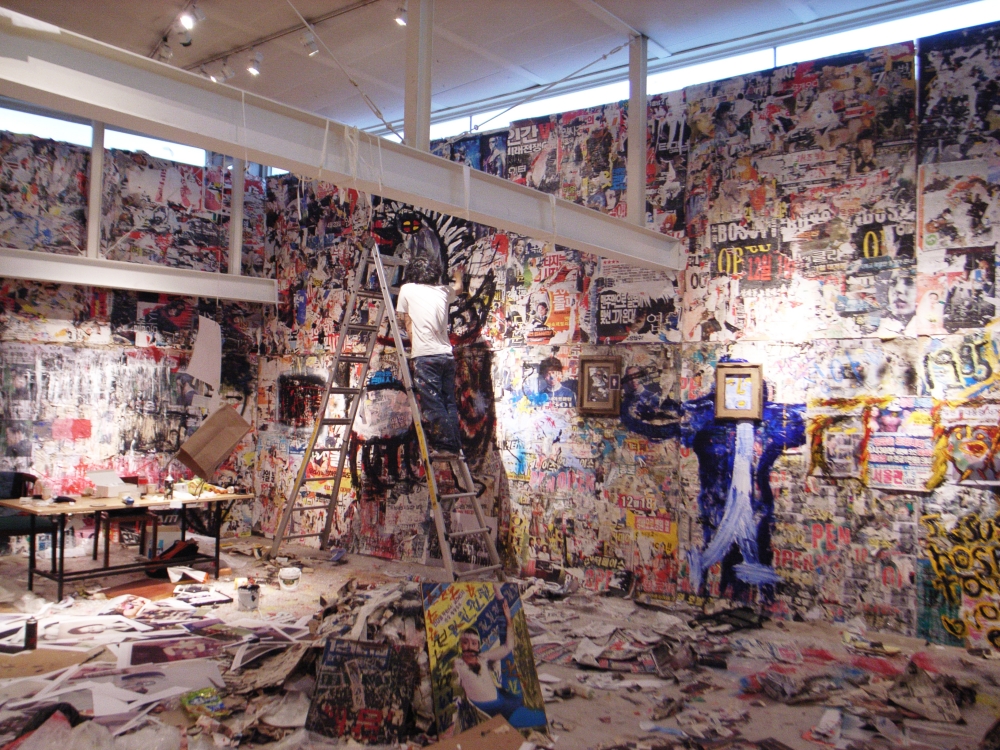
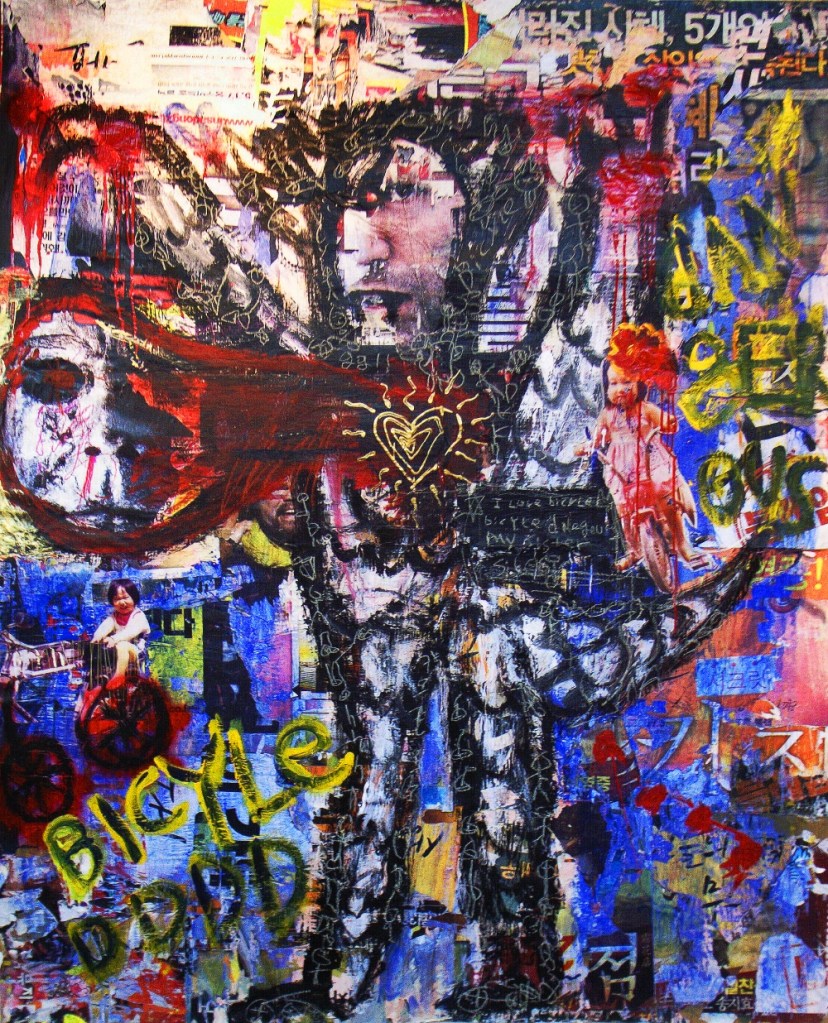
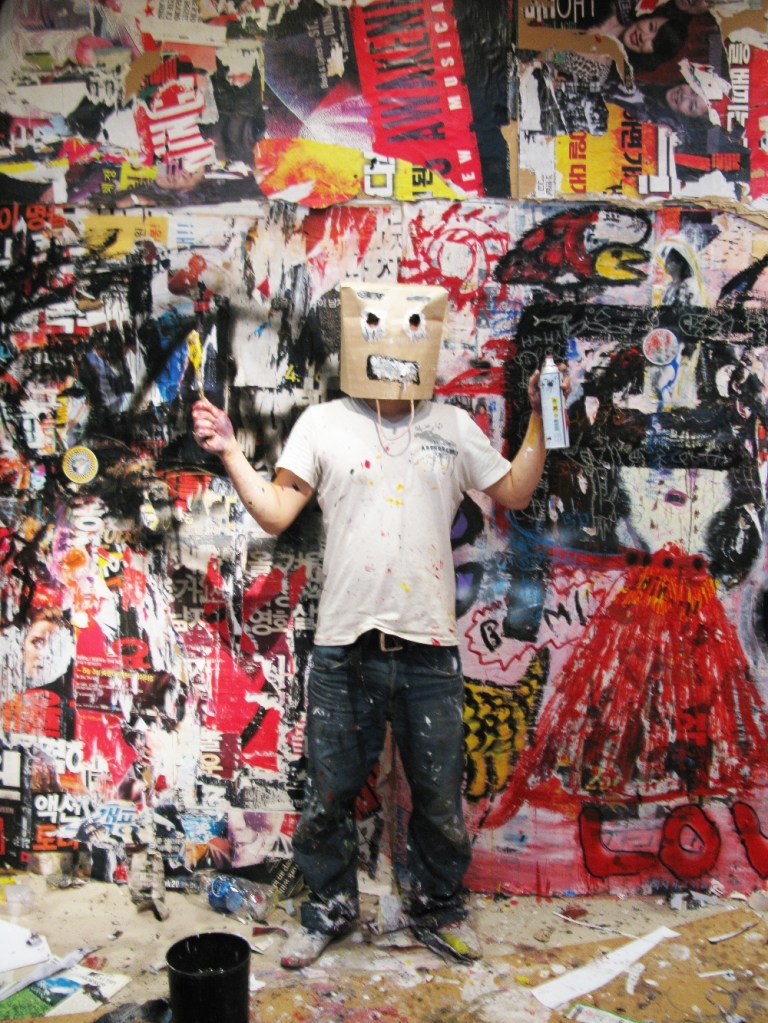
개인전 〈하다〉는 박철호가 예술에 대해 품어온 생각과 태도를 담백하면서도 솔직하게 드러낸 자리였다. 사진이라는 매체의 경계에 안주하지 않기 위해 도록을 뒤적이며 독학했고 누군가의 전시가 무산된 자리를 대신해 얻게 된 뜻밖의 기회를 통해 이 전시를 실현했다. 전시장 2/3 지점에는 높이 7미터의 가벽이 세워졌고 관객은 그 벽에 뚫린 작은 구멍을 통해서만 내부를 엿볼 수 있었다. 가벽 안쪽은 작가가 현장에서 즉흥적으로 진행한 데콜라주 회화와 드로잉으로 빽빽이 채워져 마치 폐쇄된 세계 속에서 펼쳐지는 내면의 언어처럼 구성되었다.
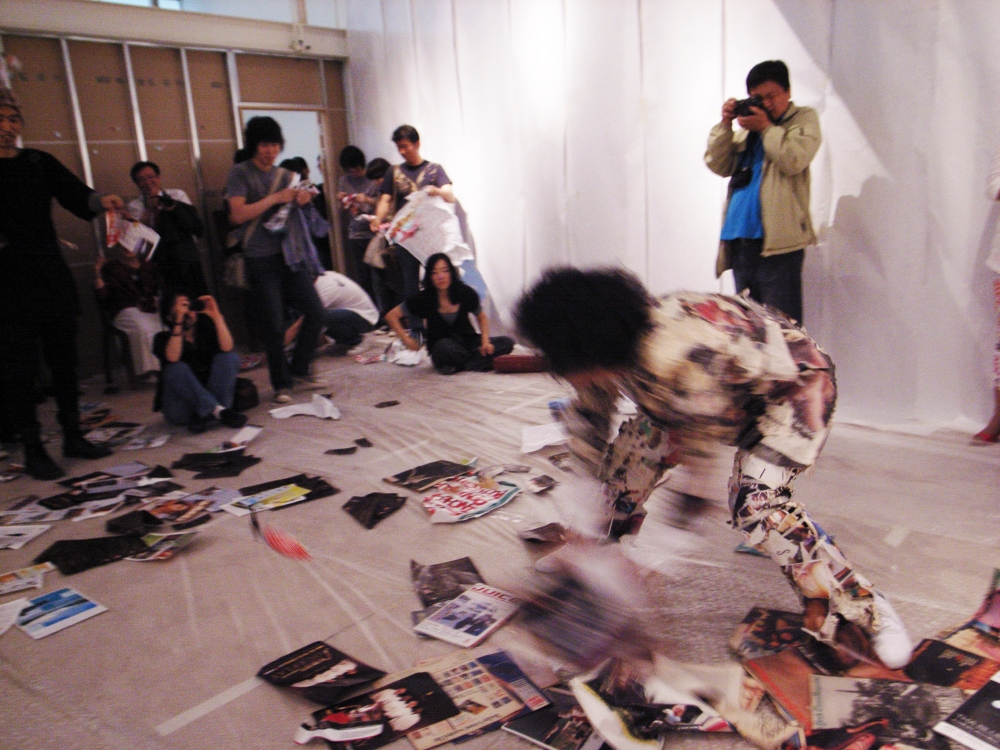
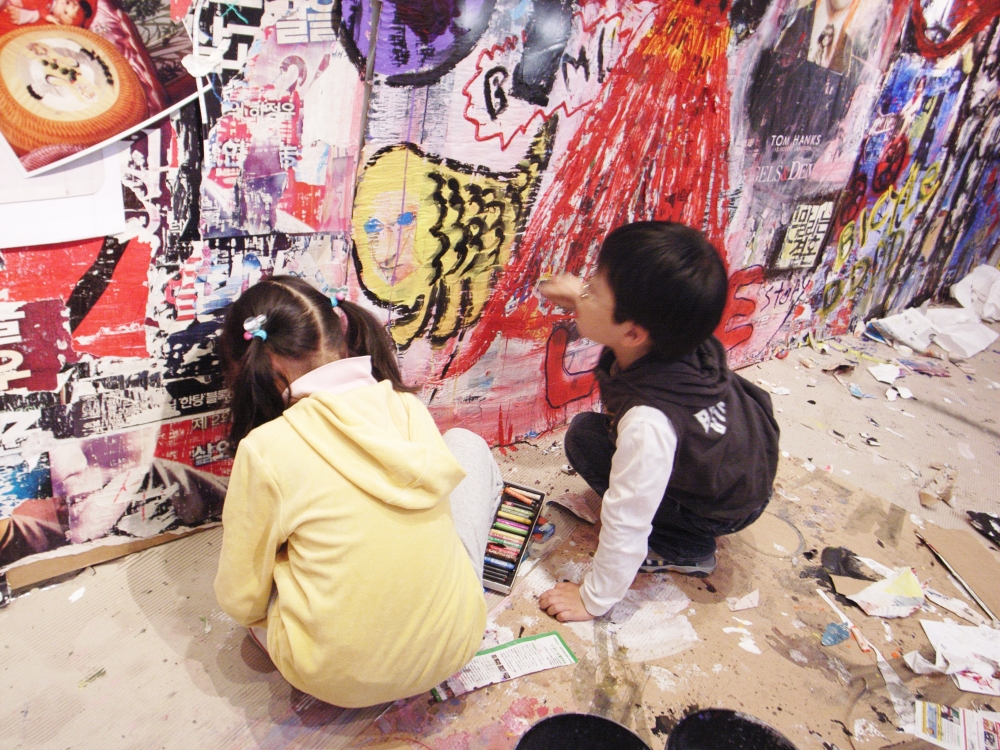
전시가 진행되는 기간 동안 작가는 가벽을 철거하여 공간을 완전히 열어젖혔다. 종이로 덮인 벽을 관객과 함께 뜯고 작품 위에 낙서를 남기도록 유도하는 퍼포먼스가 이어졌다. 작가가 준비하고 관객이 완성한 벽면의 드로잉 일부는 선택적으로 잘라 작품화했고 전시장을 정비한 후 선택된 회화를 권위있는 갤러리의 전통적 전시 방식에 따라 전시했다. 〈하다〉는 과정과 변화를 전면에 드러낸 실험적 무대쳤으며 작가와 관객이 작품을 함께 ‘만들고 다시 해체하는’ 경험을 공유하게 했다.
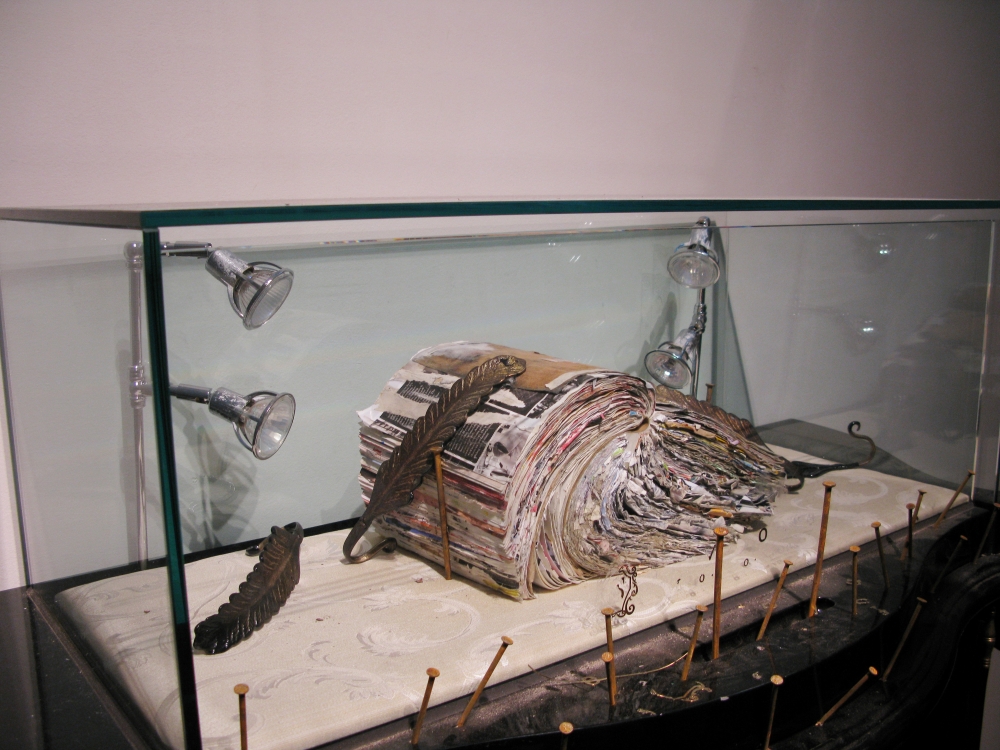
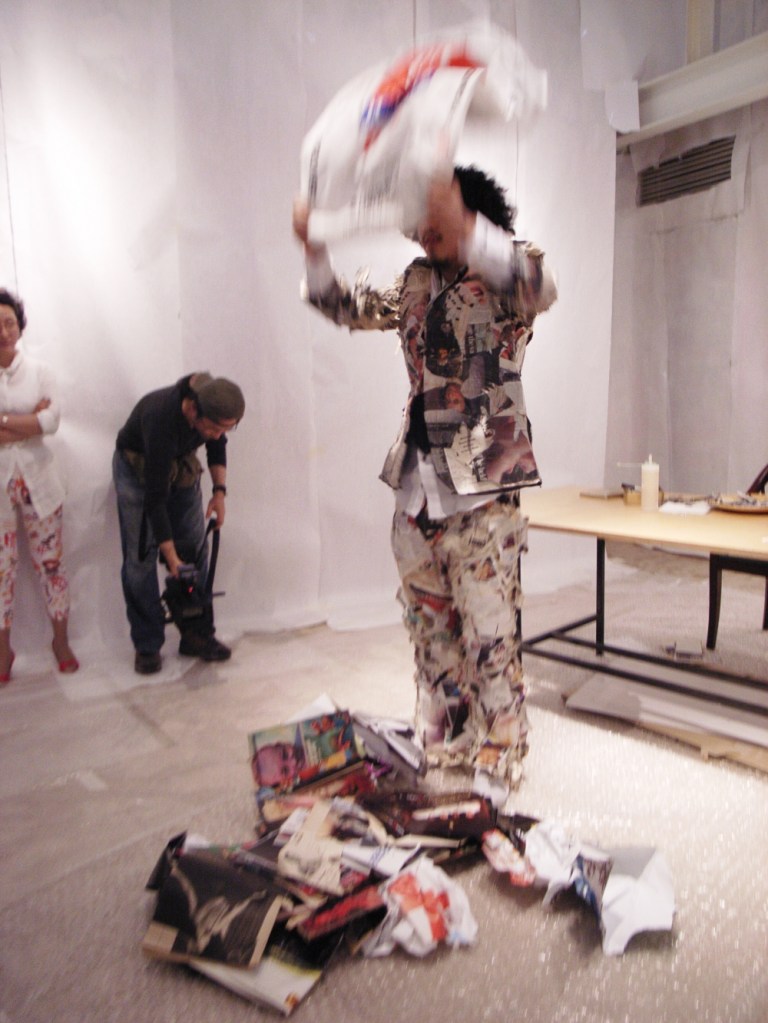
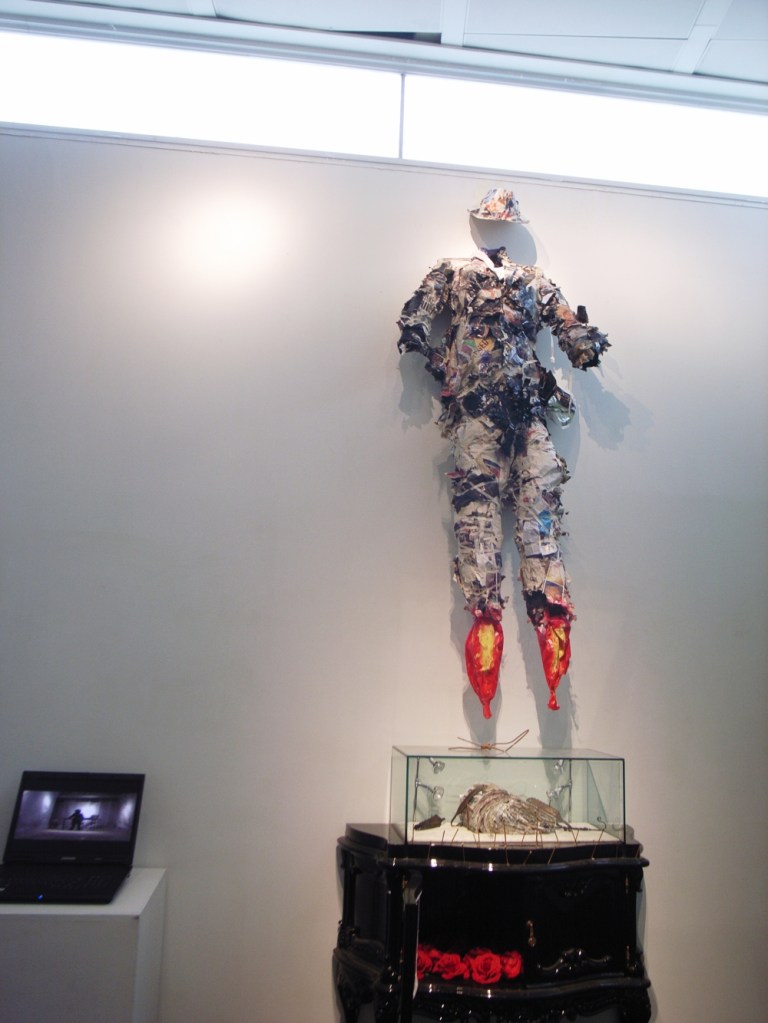
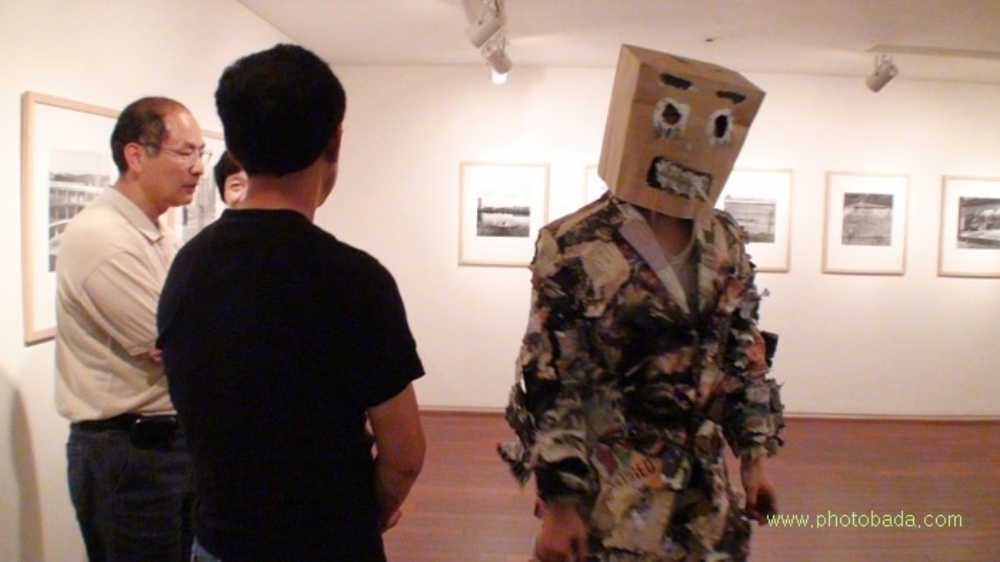
박철호는 전시 초반, 흰 종이로 덮인 벽과 비어 있는 작업대만 놓인 공간에서 작가는 포스터와 신문으로 만든 옷을 입고 등장해 종이를 씹어 먹고 잘게 분쇄한 잡지에 케첩을 뿌려 다시 먹으며 쓰레기 같은 이미지들을 몸에 붙이고 관객과 함께 뒤엉켰다. 가벽이 걷히자 비로소 온갖 이미지가 폭발적으로 드러났고 그는 “이 쓰레기로 이곳에서 일주일간 작업하며 살겠다”고 선언했다. 일주일 동안 전시장에 ‘출근’하며 가족사진과 기억의 조각들을 벽에 채워 넣고 마지막 날엔 종이옷을 입고 인사동 거리를 활보하며 거리와 전시장을 연결했다. 〈하다〉는 작업과 삶을 어떻게 살아낼 것인가에 대한 강렬한 응답이자 기존 예술의 규범에 틈을 내는 퍼포먼스와 설치, 관객의 개입이 뒤엉킨 생생한 실험의 장이었다.
DO was a solo exhibition that candidly revealed Park Chulho’s attitude toward art and his working philosophy. Determined not to be confined to the medium of photography, he taught himself by poring over exhibition catalogues and took on this show when an unexpected opportunity arose—he was asked to step in for a canceled exhibition. At two-thirds of the gallery space, a 7-meter-high temporary wall was erected. Viewers could only peek through small holes punctured in the wall, behind which the artist had filled every surface with spontaneous décollage paintings and drawings made on site, creating a sealed world where his inner language unfolded.
As the exhibition progressed, Park dismantled the wall, inviting the audience to tear down the paper-covered surfaces and leave their own marks. Selected fragments of these collaborative drawings were later cut and reworked for display. DO became an experimental stage showing process and transformation, where artist and audience made and unmade the work together.
At first, Park appeared in an empty, white-papered room wearing clothes made of posters and newspapers. He chewed and swallowed paper, rolled across shredded magazines, and attached these “trash images” to his body. When the wall came down, a burst of images filled the space. He declared, “I will live and work here for a week using this trash,” spending days filling the walls with family photos and fragments of memory. On the final day, he walked through Insadong in paper garments, extending the exhibition into the city. DO was a powerful response to the question of how to live one’s life and artistic practice, becoming a vivid site of experimentation where performance, installation, and audience intervention intertwined to crack open the rigid norms of conventional art.















 Park Chulho