7.7-7.21, 2021
Space 9, Seoul
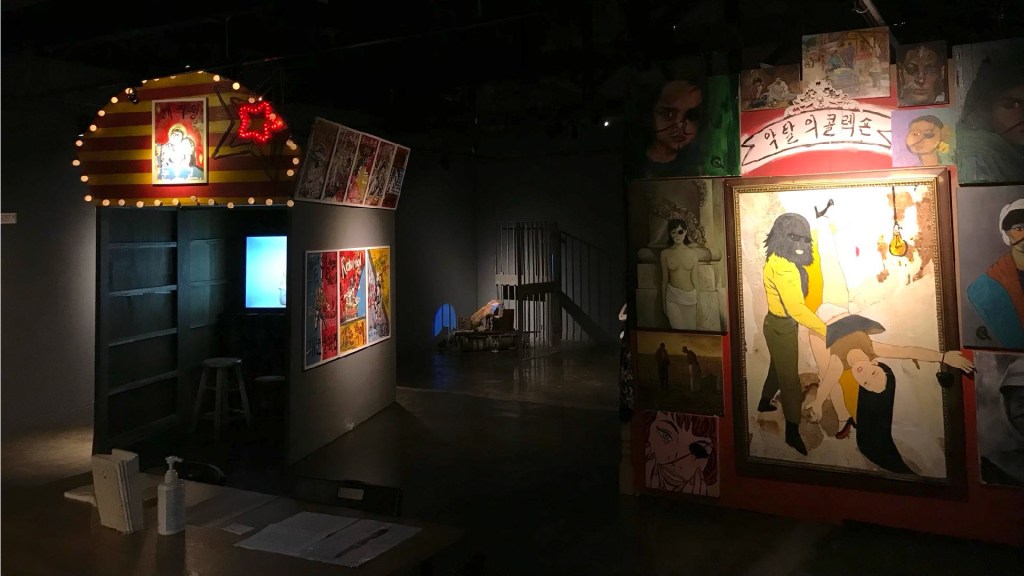
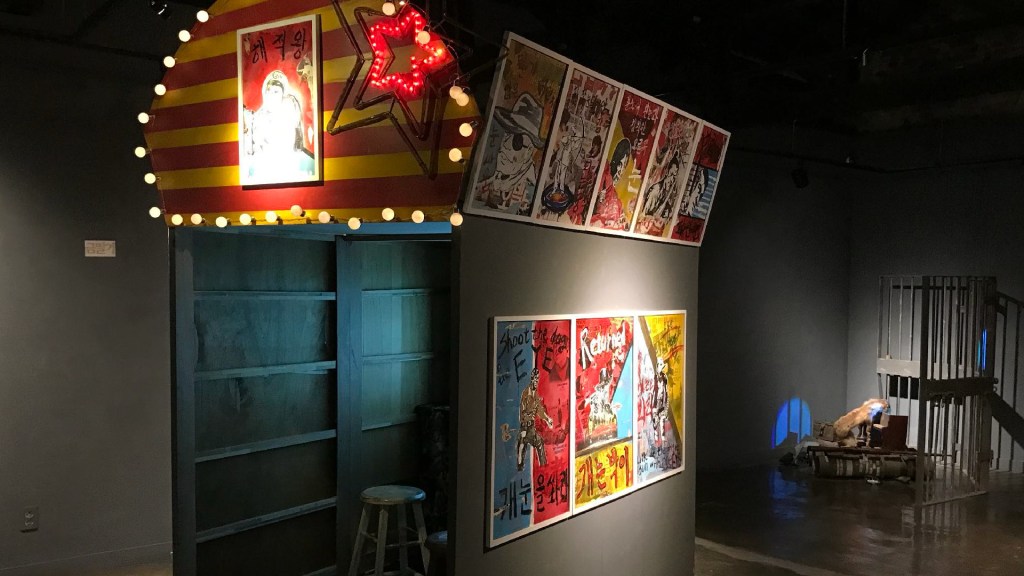
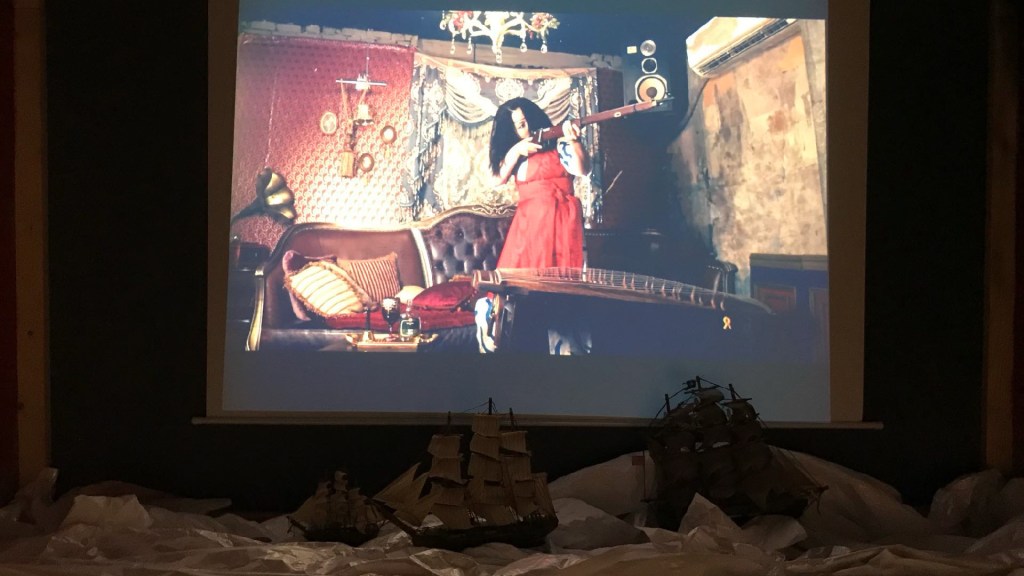
〈적대자〉는 박철호가 자신 안의 복잡한 감정, 억압된 기억, 사회적 역할과 폭력의 구조를 다층적으로 풀어낸 개인전이었다. 스페이스9에서 열린 이 전시는 연극적 구성과 다원예술의 형식을 띠며 고물과 폐기물, 가상의 인물, 영상, 설치, 퍼포먼스를 엮어 독창적인 서사 세계를 구축했다. 전시는 마치 소극장처럼 네 개의 장면으로 나뉘며 각각의 방은 박철호의 페르소나가 등장하는 픽션의 무대이자 현실과 환상이 얽힌 고백의 공간으로 기능한다.
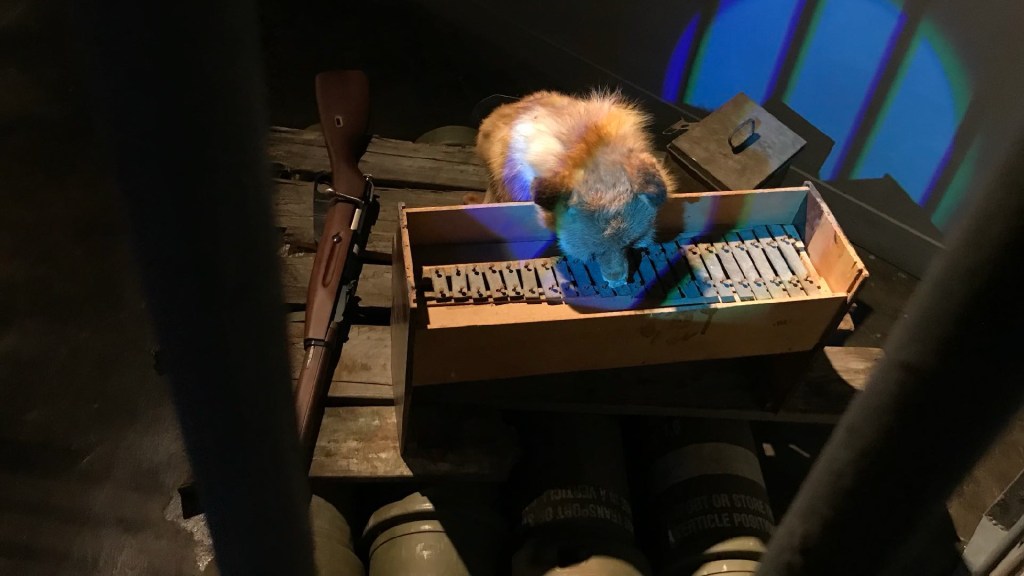
〈적대자〉의 중심에는 고물 수집 노동자이자 예술가인 작가 자신이 있다. 그는 폐기된 오브제에 상징을 덧입히고 그것들을 바탕으로 스스로 구성한 이야기 안에 등장인물들을 배치하며 사회 구조 속에서 배제되거나 억눌린 감정과 서사를 드러낸다. 애꾸눈 인물, 수상한 해적 캡틴큐, 태닝기 속의 뱀과 헵시바, 힐러 도로시, 시체와 총기, 뗏목과 여우박제 등은 모두 현실과 허구를 가로지르며 논리적이어야 하고 도덕을 따라야 하는 규범 체계에서 인간의 나약함과 오류 그리고 적대하는 문화적 현상들을 담아냈다.
박철호는 스스로를 고백의 화자이자 이야기꾼으로 배치하면서, 관객이 작가의 시선에 고정된 채 장면을 목격하도록 유도한다. 이 전시는 감상자가 능동적으로 개입하기보다는 작가가 설계한 서사의 리듬 안에 편입되어 일종의 신실한 구경꾼이 되기를 요구한다. 그렇게 박철호는 ‘적대자’라는 이름 아래 과거와 현재의 감정, 외부로부터의 시선, 버려진 것들과 정서적 상흔들을 그물처럼 엮어낸다. 이 전시는 작가의 삶이 직접 깃든 해부이며 고통과 유머가 공존하는 날것의 서사다.
The Antagonist was a solo exhibition in which Park Chulho unraveled the layered complexities of his inner emotions, repressed memories, social roles, and structures of violence. Held at Space9, the exhibition took on a theatrical structure and a multidisciplinary form, weaving together scrap materials, discarded objects, fictional characters, video, installation, and performance into a singular narrative universe. Like a small theater, the exhibition unfolded in four scenes, each room functioning as a stage where Park’s personae emerged—confessional spaces where reality and fantasy intertwined.
At the center of Antagonist stood Park himself, both a scavenger and an artist. He imbued abandoned objects with symbolic weight and arranged them within self-composed stories that gave voice to suppressed emotions and marginalized narratives within social systems. One-eyed figures, the suspicious pirate CaptainQ, Hephzibah and snakes in a tanning booth, the healer Dorothy, corpses, guns, rafts, and taxidermied foxes—all traversed the line between fact and fiction. These elements conveyed human frailty, contradiction, and culturally embedded antagonisms that defy the expectations of logic and moral order.
Park positioned himself as both narrator and storyteller, guiding the audience to witness scenes from his perspective. Rather than inviting active participation, the exhibition asked viewers to surrender to the rhythm of the constructed narrative, becoming reverent spectators. Through this, Park wove together past and present emotions, external gazes, discarded fragments, and psychic wounds under the name Antagonist. The exhibition became an autopsy of the artist’s own life—a raw narrative where pain and humor coexisted.

 Park Chulho